Skip to content
Top-rated outdoor gear, ranked

Best Of 2026

Best Hunting Base Layers of 2026

Our top 12 picks, independently ranked. Budget to premium.

A base layer is the only piece of hunting clothing that touches you for every minute of the season, and it is the piece most hunters buy last. That order is backwards. Insulation and shells only manage the heat and water you give them, so if your first layer is holding sweat against your skin at 5 a.m., no jacket on the market will fix the shiver you get an hour later on a cold stand. The three ways hunters use base layers pull in different directions: big game hunting means a hard climb followed by hours of sitting still, waterfowl means predawn cold plus wader heat and splashed water, and upland means walking all day and almost never being cold at all.

That is why weight matters more than brand. Base layers are sold by fabric weight in grams per square meter, and the number is the single most useful spec on the tag. Roughly 120 to 150 gsm is a walking layer for upland birds, early archery, and warm sits. Around 200 to 250 gsm is the true all-rounder that most hunters should own first. Anything at 330 gsm or heavier is a late-season and blind-sitting piece that will cook you on an approach march. Merino wool wins on odor control and on staying tolerable when damp, which is why it dominates hunting. Synthetics win on drying speed, abrasion resistance, and price, which is why they still belong in a warm-weather kit. Blends and dual-face constructions, where wool faces out and a synthetic faces your skin, are the current answer to merino's two real weaknesses: it itches some people and it wears out fast.

Prices here run from about $60 to $220 for a single top, and that spread is real rather than pure branding. What the money mostly buys is fabric engineering (finer micron wool, nylon-cored yarns, panel construction) plus fit and durability. What it does not buy is a proportional jump in warmth. A $65 merino crew at 250 gsm will keep you as warm as a $200 one at the same weight. The expensive piece will fit better under a pack, itch less, and last more seasons. Both ends of that range are represented below on purpose.

At a glance

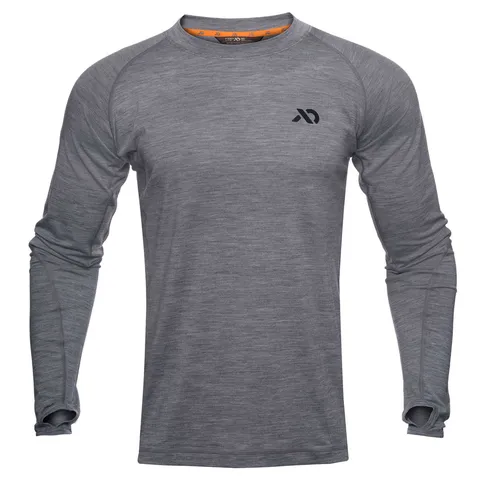
Core Merino 330 Half-Zip
Best OverallPremium

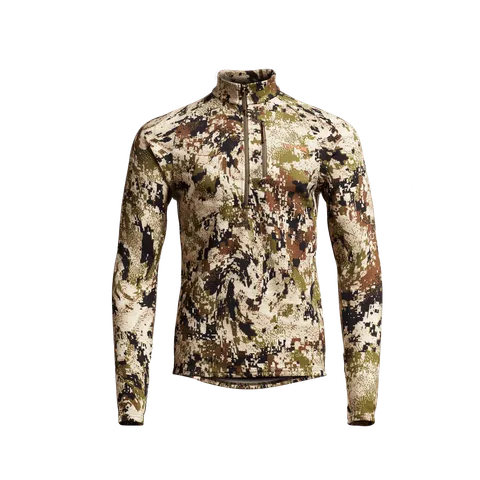
1. Core Merino 330 Half-Zip

Sitka Gear

$199–$219

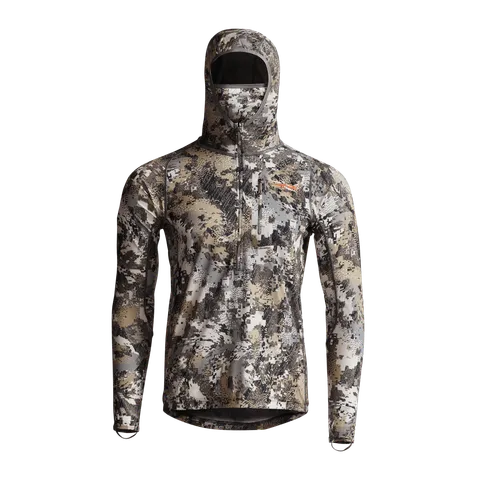
A 330 gsm ArmorSpun merino face over a recycled synthetic interior, which fixes merino's two chronic complaints (itch and fragility) without giving up odor control. The half zip lets you dump heat on the climb and close it back up on the stand.

Best for: Late-season big game hunters who sit still in real cold and want one layer to do it for years.

Dual-face build keeps wool off your skin, so it stays comfortable for people merino normally itches · Snag-resistant sleeve stitching survives pack straps better than plain fine-gauge wool · Machine wash and dry with regular laundry, no special care routine · Half zip plus thumb holes make it genuinely usable as a standalone layer on cool days

At $219 it costs three times a competent budget merino that is nearly as warm · 330 gsm is far too much fabric for early season or upland walking · 15 ounces is heavy if you are counting pack weight on a backcountry hunt

Merino 250 Base Layer Midweight Long Sleeve Crew
Best ValueBudget

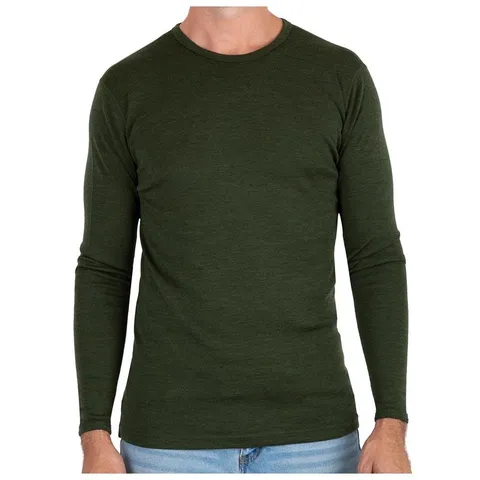
2. Merino 250 Base Layer Midweight Long Sleeve Crew

MERIWOOL

$60–$75

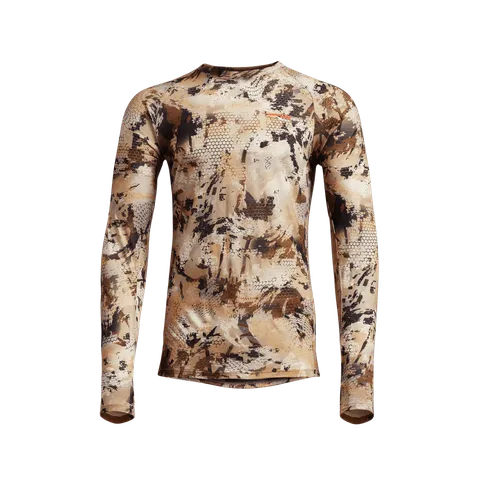
100% merino at 250 gsm interlock knit for about $65, which is the same fabric weight the premium hunting brands charge $150 or more for. It is the layer most hunters should buy first and the benchmark everything else here gets measured against.

Best for: Any hunter buying a first serious base layer who would rather spend the difference on boots or optics.

True midweight 250 gsm merino at roughly a third of premium hunting brand pricing · Odor control is the real thing, so multi-day hunts do not need a change of shirt · Works as a base layer or as a light midlayer over a thinner shirt · Widely stocked, so sizing exchanges are easy

Straight-cut fit is roomier and less trim under a pack than athletic hunting brands · Pure merino at this price wears through at shoulder and elbow contact points faster than blended fabrics · Solid colors only, no camo option

Furnace Hoody
Best PremiumPremium

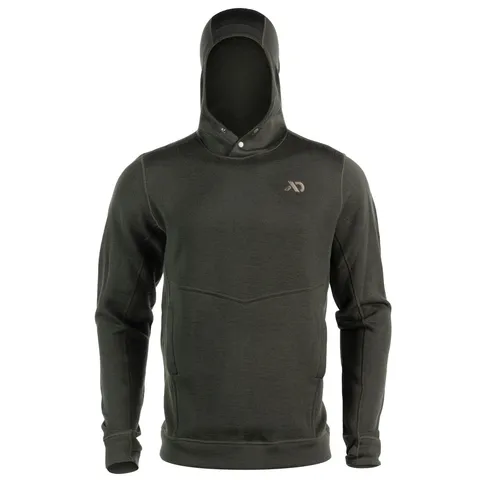
3. Furnace Hoody

First Lite

$168–$210

350 gsm of 95% merino with a touch of spandex, built as the warmest wool piece First Lite makes. It is the answer for hunters whose problem is genuinely cold sitting rather than cold walking.

Best for: Late-season whitetail and waterfowl hunters who sit motionless in weather that beats midweight layers.

One of the warmest merino layers sold for hunting, with a hood that covers the heat you lose at the neck · Spandex content gives it real stretch, so it does not bind on a draw or a shoulder mount · Launders normally despite the high wool content · Camo and solid options both available

Full price sits near $210, which is a lot for a single layer · Some testers report mild itch against bare skin · Thick enough that it fights for room under a fitted jacket

Classic Thermal Merino 250 Crew Base Layer Top
Mid-range

4. Classic Thermal Merino 250 Crew Base Layer Top

Smartwool

$105–$125

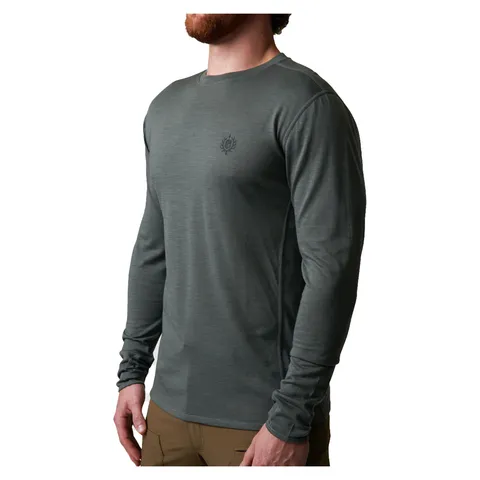
The 250 gsm interlock merino that most of the outdoor industry treats as the reference midweight. It is not a hunting specific product, and under a jacket that does not matter at all.

Best for: Hunters who also ski, hike, or fish and want one midweight that covers every one of those.

Proven 250 gsm construction with consistent sizing across many seasons of production · Flatlock seams sit flat under pack straps and vest harnesses · Stocked at REI and most outdoor retailers, so you can try it on before buying · Frequently discounted well below list, which changes the value math

List price near $125 is high for what the same fabric weight costs elsewhere · Fine-gauge pure merino pills and thins at high-wear points · No camo and no hunting-oriented features like a face mask or thumb loops on the base crew

Core Lightweight Hoodie
Editor's PickMid-range

5. Core Lightweight Hoodie

Sitka Gear

$135

A 6.6 ounce polyester hoodie with a built-in stretch mesh face mask, which solves concealment and sun protection in one piece. For early season and for anyone who moves a lot, this is the most useful thing on this list.

Best for: Waterfowl and early-season hunters who need concealment, sun cover, and fast drying in one layer.

Integrated breathable face mask replaces a separate piece of gear you would otherwise forget · Dries extremely fast, which matters under waders and on long upland walks · Polygiene odor control keeps a synthetic wearable across multiple days · Available in Optifade Waterfowl Marsh and Timber for hunters who wear it as an outer layer

Polyester will never match merino for odor suppression on a week-long big game hunt · Too light to be your only layer once temperatures drop into the 30s · $135 is steep for a synthetic hoodie

Merino Wool Base Layer Men's Set (Midweight 250)
Best BudgetBudget

6. Merino Wool Base Layer Men's Set (Midweight 250)

Merino.tech

$95–$110

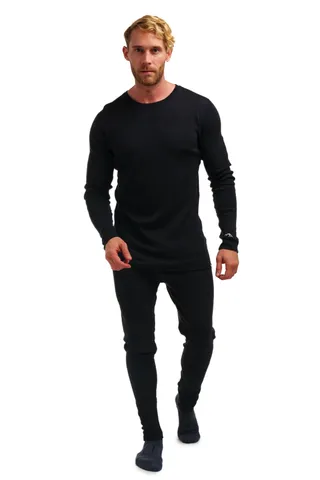
Top and bottom together at 250 gsm of 17.5 micron merino for about $100, which is less than most brands charge for the top alone. The value here is the complete set, not any single standout feature.

Best for: Hunters outfitting top and bottom on one budget, or buying a second set so one can dry.

Full top and bottom set for roughly the price of one premium top · 17.5 micron wool is fine enough to avoid the scratchy feel of cheap merino · Same 250 gsm midweight that covers most of the hunting season · Some sets ship with merino socks included

Fit is generic rather than athletic, with extra fabric through the torso · Seam and cuff finishing is visibly less durable than at three times the price · Color range is basic and none of it is camo

Core Merino 120 LS Crew
Mid-range

7. Core Merino 120 LS Crew

Sitka Gear

$119

Ultralight 120 gsm ArmorSpun merino at 6.1 ounces, built for the hunts where your real enemy is overheating. Snag-resistant sleeve stitching is the detail that separates it from generic lightweight wool.

Best for: Upland hunters and early-season archers who cover ground and need odor control without bulk.

Light enough to wear all day while walking without cooking · Merino odor resistance in a weight you would normally have to buy in synthetic · Reinforced sleeve stitching resists the abrasion that destroys thin wool under pack straps · Machine washable and dryer safe, unusual for wool this fine

120 gsm gives you very little standing warmth once you stop moving · $119 is a lot for a lightweight shirt · Thin merino at this weight is the least durable category of base layer regardless of brand

Mid-range

8. Peloton 118 Zip-T

KUIU

$69–$99

A 118 gsm synthetic built from Toray Primeflex spiral yarn, which gets its stretch from yarn structure instead of elastane. That means it holds its shape across seasons better than most stretchy synthetics.

Best for: Backcountry big game hunters doing hard aerobic work in warm early-season weather.

Stretch and recovery without elastane, so it does not go baggy after a year · UPF 50+ and very fast drying for hot early-season hunts · Quarter zip vents heat quickly during a climb · Easy to launder and cheap enough to own two

Synthetic odor build-up is real on multi-day hunts, wool it is not · 118 gsm is a warm-weather weight, not a cold-sit layer · Men's sizing only across most of the line

Ridgeline Base Layer Top
Budget

9. Ridgeline Base Layer Top

Born Primitive

$63–$79

A 150 gsm 50/50 merino and polyester blend that splits the difference between wool's odor control and synthetic's drying speed. Under $80 it is one of the few genuinely hunting-designed layers in the budget tier.

Best for: Archery and early rifle hunters who want a hunting-cut layer without premium pricing.

Blend dries far faster than pure merino at the same weight · Built-in thumbholes keep sleeves in place while pulling on outer layers · Hunting-specific cut and colorways rather than a repurposed fitness shirt · Regularly discounted to the low $60s

Runs tight through the biceps and shoulders on larger builds · 50% polyester means it will hold odor longer than a full merino piece · 150 gsm limits it to moderate temperatures unless you layer over it

Wick Long Sleeve Crew
Mid-range

10. Wick Long Sleeve Crew

First Lite

$80–$100

150 gram Aerowool with 37.5 active particle technology, which is First Lite's answer to moving sweat vapor before it condenses. It is the piece to wear when you know the walk in will make you sweat.

Best for: Hunters with long uphill approaches who arrive at the stand soaked in anything else.

37.5 particle treatment is aimed squarely at drying speed, the thing that ruins cold sits · Light 150 gram construction layers cleanly under anything · Blend holds up better to abrasion than comparably light pure merino · Frequently discounted to around $80

List price near $100 for a lightweight shirt is optimistic · Not warm enough to stand alone past shirtsleeve weather · Blended fabric gives up some of merino's odor advantage

Boulder 125 Crew Base Layer Top
Premium

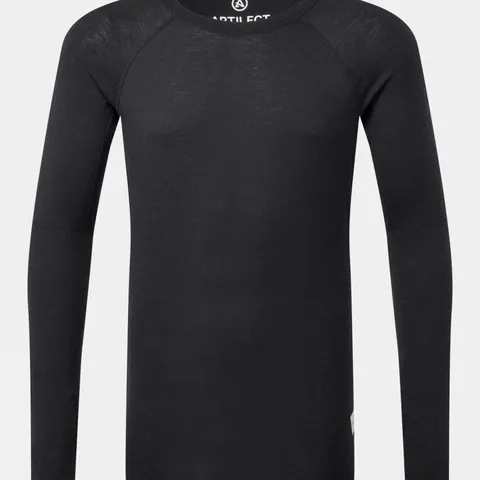
11. Boulder 125 Crew Base Layer Top

Artilect

$110–$130

126 gsm Nuyarn fabric, 85% merino spun around a 15% nylon core, which dries dramatically faster and stretches further than conventionally spun wool. Body-mapped perforations sit where you actually sweat.

Best for: Backcountry hunters who prize fast-drying merino and will follow the care instructions.

Nuyarn construction dries far faster than standard merino at the same weight · Nylon core makes fine wool meaningfully more durable under a pack · Ventilation panels are placed by body map rather than sprinkled decoratively · Stretches and recovers well enough that it never binds on a shot

$110 to $130 for a 126 gsm shirt is the steepest price per gram here · Not dryer safe, so care is fussier than most picks on this list · Skiing and alpine oriented brand, so no camo and no hunting-specific features

ColdGear Base 2.0 Crew
Budget

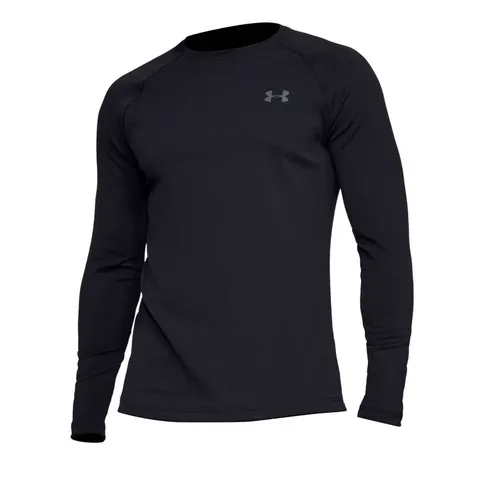
12. ColdGear Base 2.0 Crew

Under Armour

$55–$70

A brushed grid-interior synthetic with UA Scent Control, sold at $60 in stores hunters already shop. It is the pragmatic pick when you need a warm layer this weekend and a wool budget is not happening.

Best for: Cost-conscious hunters and anyone who needs a durable warm layer available locally today.

Brushed grid interior traps warm air without adding real bulk · Scent Control treatment addresses the one place synthetics normally lose to wool · Sixty dollars and stocked at nearly every sporting goods retailer · Tough enough to abuse without worrying about it

Scent treatments are a finish, so they fade with washing in a way merino's natural odor resistance does not · Compression-leaning fit is not for everyone under other layers · Warm rather than warmest, so late-season sits still want something heavier over it

How we choose

Selection started from fabric weight and construction rather than from brand, because those two variables predict field performance better than anything else on a hang tag. We looked for models that are actually in production and buyable in the United States in 2026, cross-checked stated fabric composition and gsm against manufacturer product pages, and pulled street prices from the brands and from major retailers (REI, GOHUNT, Bass Pro, Amazon) rather than from press releases. We prioritized pieces that solve a specific hunting problem: odor suppression for big game, drying speed for waterfowl and wader sweat, and low bulk plus abrasion resistance for upland walking under a vest or a pack. Tiers are drawn on street price for a top, with budget under roughly $80, mid roughly $80 to $150, and premium above $150. Higher tiers earn their place through finer wool, better shaped panels, and durability features like snag resistant sleeve stitching, not through extra warmth. Ranking reflects how broadly we would recommend a piece to a hunter buying one layer, which is why a $65 crew sits near the top and a $219 half zip does not automatically outrank it. No brand paid for placement, supplied product in exchange for coverage, or reviewed this guide before publication. Retailer links may earn a commission, and that arrangement had no bearing on which products appear or how they are ranked.

Common questions

Buy a midweight merino in the 200 to 250 gsm range. It covers the widest span of the season: cool upland mornings, most of archery season, and rifle season under an insulating layer. A 120 to 150 gsm layer leaves you cold on a stand, and a 330 gsm layer soaks itself on the walk in. If you later add a second piece, make it a lightweight for early season and warm sits rather than a heavier one.

For big game it usually is, for two reasons. Merino resists odor bacteria, so a shirt worn four days straight still smells like almost nothing, which matters when you are hunting a deer's nose. It also stays warm when damp instead of turning clammy. Synthetics beat merino on drying speed, durability, and price, so they make more sense for warm weather upland walking and for anyone hard on gear. A wool exterior with a synthetic interior is a legitimate third answer and is what several of the picks above use.

Only if you plan to hunt in it as an outer layer, which realistically means warm early season sits and long upland walks where you shed everything else. Under a jacket it makes no difference at all, and camo versions typically cost more than the same fabric in a solid color. Buying a solid base layer and putting the camo budget into your outer layers is the better allocation for most hunters.

Almost always because you sweated on the walk in. A base layer can only move moisture that your insulation lets escape, so if you hike in fully dressed you arrive damp and then sit still while that moisture pulls heat out of you. Walk in wearing only the base layer, even if it feels too cold at the truck, and put your insulation on once you are settled and have stopped producing heat. Carrying a dry spare top in your pack for late season sits is worth the space.

Cold or warm wash on a normal cycle with regular detergent works for most modern merino. Skip fabric softener, which coats the fibers and kills wicking, and skip anything with bleach. Check the tag before you use a dryer, because several premium wool pieces (the Artilect Boulder among them) specify air drying and will shrink otherwise. Hunting specific scent free detergents are optional, though they will not hurt. The bigger durability factor is abrasion: pack straps and rifle slings wear thin spots into fine wool faster than washing ever will.

Yes, mainly in drying speed. Waders trap sweat with nowhere to go, so a slow drying heavy wool bottom becomes a problem on a long walk to the blind. A synthetic or wool blend bottom that dries fast serves better there, with the warm heavy layer on top where it can breathe. Upland is the same principle taken further, since you are moving constantly and your real risk is overheating rather than freezing.

Some links are affiliate links, and we may earn a commission at no extra cost to you. It never affects our rankings.

In your pocket

Take the whole unit with you.

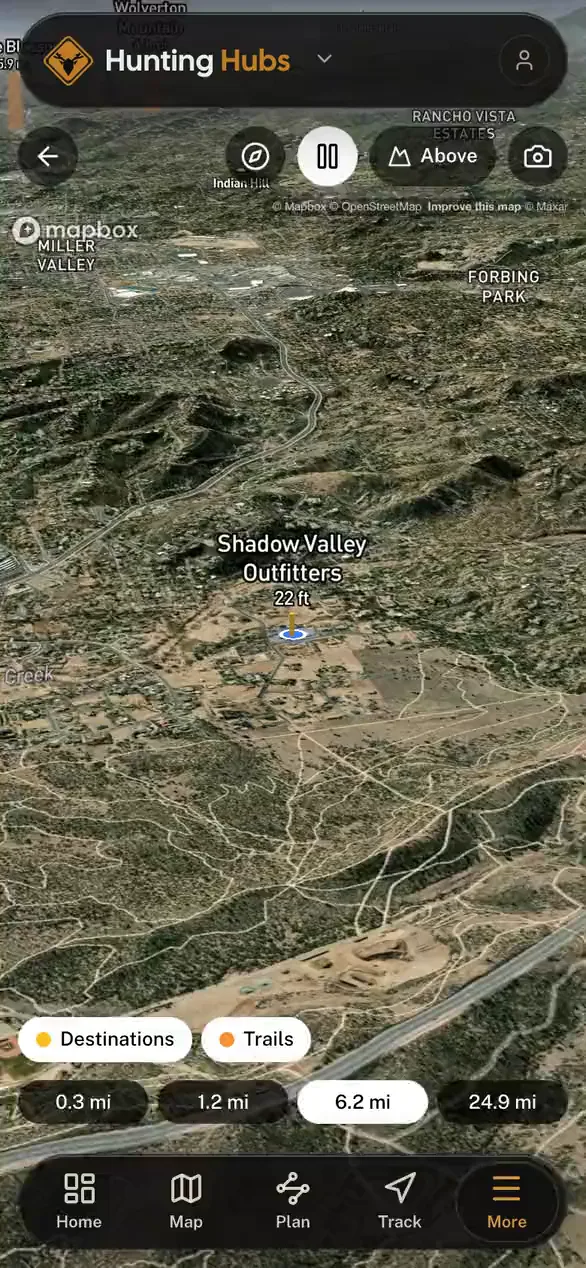
Free, no account needed. Public-land maps, field reports, and GPS tracking in your pocket.

  • Every outfitter and lodge in your pocket

  • Public-land boundaries with no subscription

  • Field reports from hunters out there now

  • GPS tracking that keeps recording deep in the backcountry

The Hunting Hubs app dashboard

For operators

Run your hunting operation?
Launch your branded surface.

Get your own branded surface in the Hunting Hubs app and a directory listing in minutes. bookings, digital waivers, and your whole operation in one cockpit.