Skip to content
Top-rated outdoor gear, ranked

Best Of 2026

Best Hunting Knives of 2026

Our top 11 picks, independently ranked. Budget to premium.

Most of the work a hunting knife actually does is small, close, and repetitive. Opening an abdomen without nicking a gut, working a hide off a shoulder, popping a ball joint, boning a hindquarter into meat bags at 10,000 feet. Almost none of that rewards a big blade. It rewards a blade that stays sharp when it is coated in fat and hair, a handle that does not turn into a bar of soap when your hands are bloody and cold, and a grind that slices rather than pushes. That is why the knives serious hunters carry keep getting smaller, and why a 2.6 inch fixed blade can break down an elk faster than a 6 inch bowie.

The price spectrum in this category is unusually honest, which is rare in hunting gear. Under $70 you are buying serviceable stainless or carbon steel, a working heat treat, and a handle that does the job. Between $100 and $200 you are buying American powder steels like CPM-S30V, S35VN, and MagnaCut, better ergonomics, and a company that will resharpen the knife for life. Above $200 you are buying a small-shop heat treat, obsessive grind geometry, and in the case of the direct-to-consumer makers, a knife that sells out in minutes. What you are not buying at any price is magic. A $325 skinner and a $20 Mora both need to be touched up partway through a big animal.

There is also a real split between big game and birds. A hunter who shoots two whitetails a year and a hunter who cleans forty ducks a season want different tools. Big game favors a stout drop point with a full tang and a handle you can drive with a wet palm. Waterfowl and upland favor something short, light, and pointed, because breasting a bird is detail work and a heavy skinner just gets in the way. Several picks below exist specifically for that second job, and a couple of the replaceable-blade knives straddle both.

At a glance

#ProductPrice
1
Small Game Knife

White River Knives

$160–$195
2
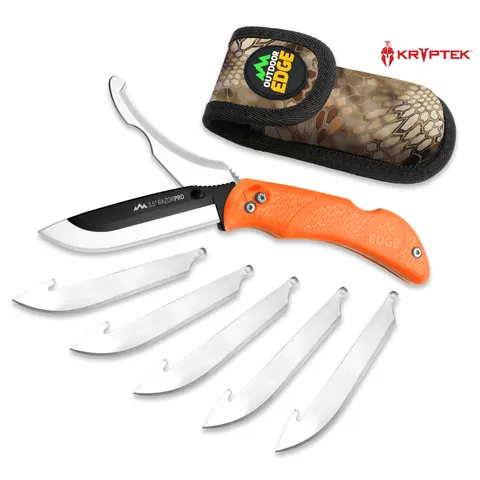
RazorPro

Outdoor Edge

$45–$65
3$150–$180
4
MagnaCut Stonewall Skinner

Montana Knife Company

$325
5$50–$65
6$200–$260
7$155–$180
8
15700 Flyway

Benchmade

$160–$200
9$18–$30
10$230–$280
11$50–$90
Small Game Knife
Best OverallMid-range

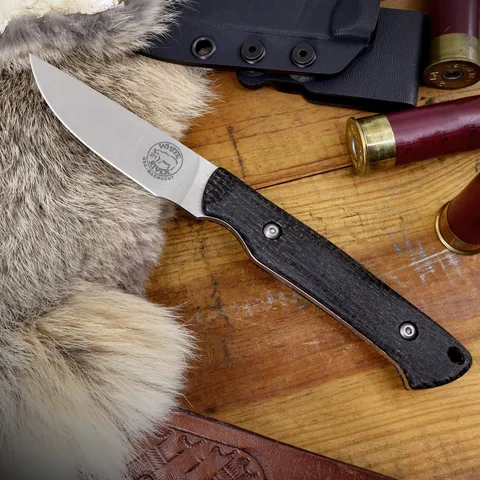
1. Small Game Knife

White River Knives

$160–$195

A 2.62 inch blade sounds too small until you break down an animal with one, and then nothing else feels right. It caps, skins, and quarters big game as capably as it handles a bird, and the S35VN keeps a working edge long past the point most knives quit.

Best for: The hunter who wants one knife that handles caping, quartering, and birds equally well.

CPM-S35VN (or MagnaCut) holds a working edge through an entire deer without a stop to touch up · Short blade plus a recessed finger choil gives genuine control for caping and joint work · Micarta scales stay grippy when your hands are covered in fat and blood · Made in Michigan with a lifetime guarantee and free sharpening for life

The 2.62 inch blade feels cramped at first if you grew up on a 4 inch skinner · Costs roughly three times what a fully serviceable budget fixed blade does · Not the tool for long slicing strokes at the processing table

RazorPro
Best ValueBudget

2. RazorPro

Outdoor Edge

$45–$65

The most knife per dollar in hunting, full stop. You get a 3.5 inch replaceable razor blade for hide and meat work plus a dedicated fold-out gutting blade, so the gut hook never dulls your primary edge.

Best for: Deer and elk hunters who want a razor edge on every animal without learning to sharpen.

Thicker Japanese 420J2 blades lock in securely and survive abuse that snaps thinner surgical blades · Separate gutting blade means one tool covers opening, skinning, and quartering · Push-button blade change works with cold, greasy hands · Blaze orange handle is nearly impossible to lose in leaves or snow

Heavier than a comparable fixed blade at 6.4 ounces · You are committed to buying replacement blades forever · The folding format traps blood and hair and needs real cleaning

15006 Steep Country
Mid-range

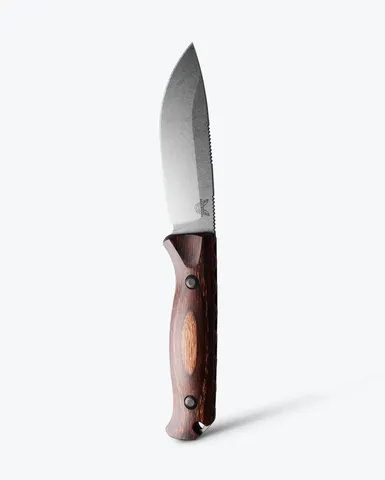
3. 15006 Steep Country

Benchmade

$150–$180

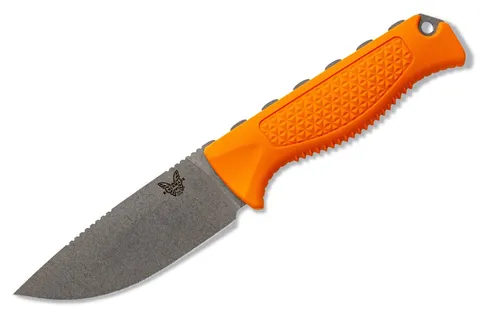
The most balanced all-season fixed blade Benchmade makes. A 3.5 inch S30V drop point with a Santoprene handle covers a whitetail in the timber and an elk on a mountainside without feeling like a compromise on either.

Best for: The big game hunter who wants one durable fixed blade for the whole season.

CPM-S30V is rust resistant and forgiving to resharpen on a field stone · Santoprene handle grips harder as it gets wetter, which is the opposite of most polymers · 3.5 inch drop point is long enough to quarter yet controllable for detail cuts · Benchmade LifeSharp service resharpens it free

The included sheath is functional rather than good, and many owners replace it · S30V chips more readily than MagnaCut if you hit bone hard

MagnaCut Stonewall Skinner
Best PremiumPremium

4. MagnaCut Stonewall Skinner

Montana Knife Company

$325

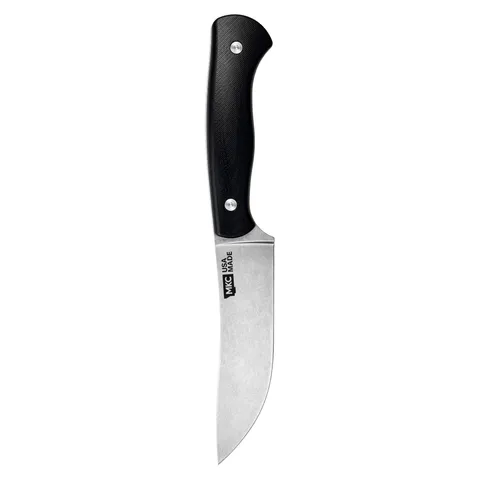
The swept belly on this blade is the single best skinning geometry in production, and MagnaCut is arguably the best hunting steel currently made. If you break down more than a couple of animals a year, it earns the price.

Best for: Guides, outfitters, and hunters who process multiple animals each season and want the best steel available.

MagnaCut combines stainless corrosion resistance with toughness that resists chipping on bone · Sweeping belly peels hide and silver skin faster than any flat-ground drop point here · Fine point still handles precise caping work despite the skinner profile · Hand finished in Montana with a heat treat that shows in edge stability

Costs $325, which is more than most hunters will ever justify · Sells in timed drops and colors go out of stock quickly · Skinner profile is less versatile than a drop point for opening an animal

Piranta-Edge
Budget

5. Piranta-Edge

Havalon

$50–$65

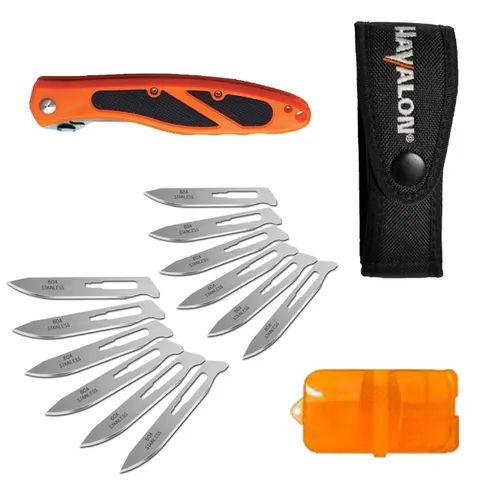
The knife that convinced a generation of backcountry hunters to stop carrying a sharpener. At 2.2 ounces with a genuinely surgical 60A blade, nothing skins faster, provided you respect what a thin blade can and cannot do.

Best for: Backcountry hunters counting ounces who want a scalpel edge on every cut.

Sharper out of the package than any conventional knife you will ever own · Weighs almost nothing, which matters on a multi-day backcountry hunt · Ships with 12 spare blades, so a full elk never dulls you out · Open-back frame rinses clean easily

Blades can snap under twisting or prying loads, and the break is sudden · Demands careful technique on heavy joints and brisket · Changing a blade with cold wet hands takes real attention to avoid a cut

15500 Meatcrafter
Editor's PickPremium

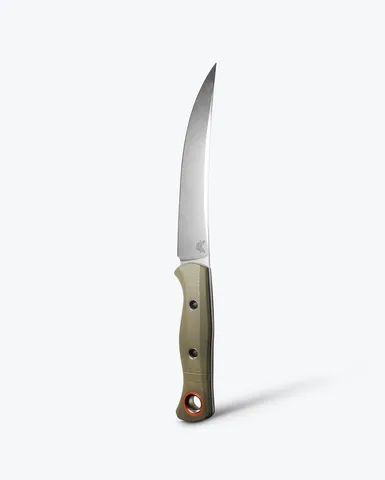
6. 15500 Meatcrafter

Benchmade

$200–$260

This is not a field knife and it does not pretend to be. It is a 6 inch trailing point built for the part of the job nobody photographs: boning quarters, trimming silver skin, and turning an animal into packaged meat.

Best for: Hunters who butcher their own animals at camp or in the garage.

Long flexible trailing point makes single-stroke boning cuts that a short knife cannot · SelectEdge geometry at a very acute angle glides through connective tissue · Santoprene handle is safe to grip with slick hands and easy to sanitize · Covers the processing gap that almost every hunting knife roundup ignores

Too long and too fine to use inside a body cavity for field dressing · Priced like a premium field knife despite being a specialist · The thin tip will bend if you use it as a pry bar

Ashley Game Knife (AGK)
Mid-range

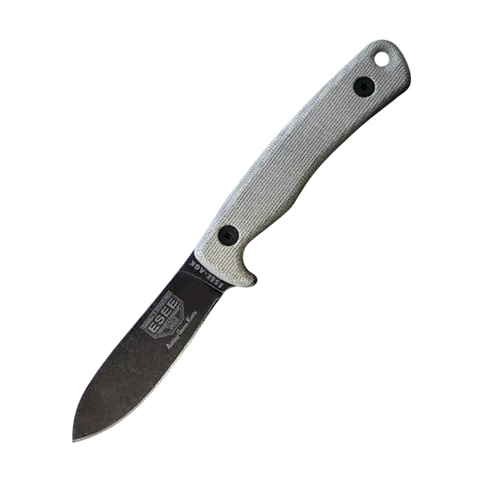
7. Ashley Game Knife (AGK)

ESEE

$155–$180

Designed by a guide who has processed everything from squirrels to buffalo, and it shows in the stoutness. This is the knife for hunters who want to lean on a blade without worrying about it.

Best for: Hog and big game hunters who want a knife they cannot break.

Thick full tang in S35VN handles hard use on joints and brisket without complaint · Orange G10 or canvas Micarta scales both hold grip when soaked · Excellent Kydex sheath, which is rare in this price bracket · Drop point profile pierces and slices equally well

Heavier at 5.2 ounces than the ultralight fixed blades here · Handle is sized for a full adult grip and feels bulky for fine caping · Overbuilt if you only take one deer a year

15700 Flyway
Mid-range

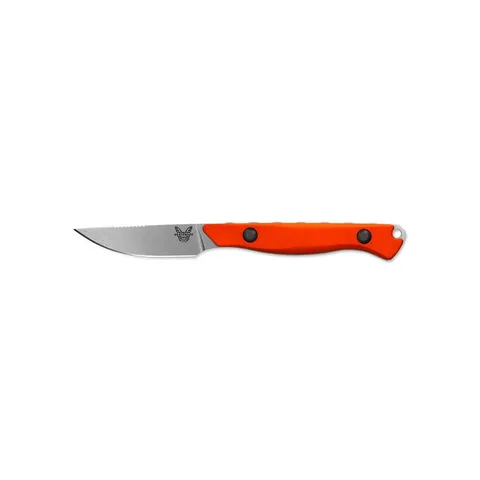
8. 15700 Flyway

Benchmade

$160–$200

The rare knife built specifically for birds rather than adapted to them. At 2.1 ounces with a 2.7 inch straight-back blade, it is exactly the tool for breasting ducks and dressing pheasants, and it doubles as a trout knife.

Best for: Waterfowl and upland hunters who clean birds by the dozen.

2.1 ounce weight and 2.7 inch blade suit the hundreds of small cuts bird work demands · CPM-154 takes a very fine edge and sharpens easily on a field stone · Blaze orange G10 makes it findable in a blind, a cattail edge, or a truck bed · Boltaron sheath drains and rinses, which matters after waterfowl

Genuinely too small for big game quartering · Priced like a general-purpose hunting knife despite being a specialist · Slim handle is less comfortable during long processing sessions

Companion Heavy Duty
Best BudgetBudget

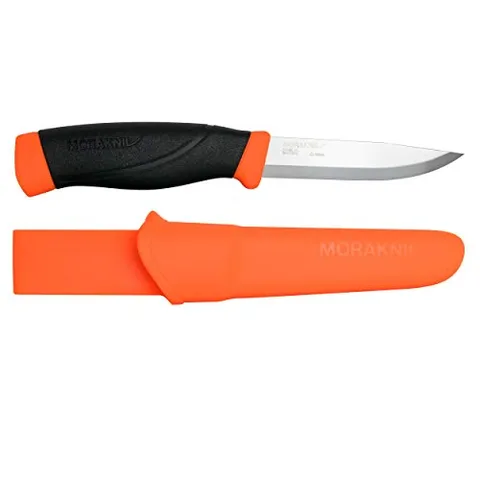
9. Companion Heavy Duty

Morakniv

$18–$30

Twenty dollars buys a 3.2mm carbon steel scandi grind that gets scary sharp and sharpens back in about a minute. It is not a dedicated skinner, but no knife under $50 cuts better or is easier to maintain.

Best for: First-season hunters, backup knives, and anyone who wants performance without the price.

Carbon steel takes a keener edge than any budget stainless and resharpens in seconds · Thick 3.2mm stock survives batoning, joint work, and abuse that ruins thin blades · Oversized high-friction handle works with gloves or wet hands · Cheap enough to keep one in every pack and truck

Carbon steel will rust if you sheath it wet, and it will develop a patina regardless · Partial tang, so it is not a knife for prying or hard lateral loads · Scandi grind and blunt 27 degree edge are not optimized for skinning

15002 Saddle Mountain Skinner
Premium

10. 15002 Saddle Mountain Skinner

Benchmade

$230–$280

A 4.2 inch S30V drop point with a pronounced belly, built for hunters who skin more than they cape. It is the knife guides reach for when there is a lot of hide to move and no time to sharpen.

Best for: Guides and high-volume hunters who spend real time on hide.

Upswept belly makes long skinning strokes fast and low effort · CPM-S30V shrugs off a whole animal before it needs attention · Comfortable in a full grip for extended skinning sessions · Made in Oregon and backed by free LifeSharp resharpening

At 4.2 inches it is more blade than most hunters need for field dressing · Around $250, which is a lot for a single-purpose skinner · Stabilized wood handle looks superb but grips less securely than rubber when wet

110 Folding Hunter
Budget

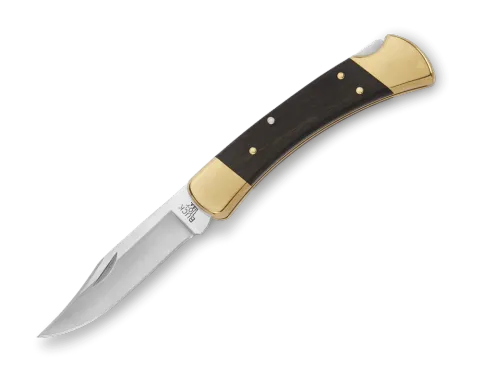
11. 110 Folding Hunter

Buck Knives

$50–$90

Sixty years in production and still the default deer knife across most of the country for good reason. Buck's 420HC heat treat punches far above the steel's reputation, and the lockback is genuinely solid.

Best for: The whitetail hunter who wants one dependable, repairable knife for a lifetime.

Buck's proprietary 420HC heat treat takes a razor edge in under a minute on a basic stone · Proven lockback design that has been refined since 1963 · Forever warranty and inexpensive factory resharpening · Folds to pocket size, so it goes with you when a fixed blade would not

Heavy at over 7 ounces with brass bolsters and wood scales · 420HC needs touching up partway through a large animal · The folding pivot traps blood and hair and is a nuisance to clean properly

How we choose

We built this list from hands-on field-dressing use, from published testing by outlets that actually put knives through animals (Outdoor Life, Field & Stream, MeatEater), and from long-running discussion among guides and backcountry hunters on Rokslide and Hunt Talk, then verified every model's current specs, steel, and street price against the manufacturer's own product page or an authorized dealer in September 2026. Ranking is by overall recommendation to a working hunter, not by price, which is why a $45 replaceable-blade knife sits above several knives costing five times as much. The tiers are drawn at roughly $70 and $200: budget knives get the job done with conventional steels and simple construction, mid-tier knives add American powder steel, better handles, and lifetime service, and premium knives buy small-shop heat treat and grind quality that shows up as fewer stops to touch up an edge on a big animal. We are an independent editorial operation. No brand paid for placement, no product here was supplied on condition of a favorable review, and affiliate links do not influence rank or award.

Common questions

For most hunters, corrosion resistance and ease of sharpening matter more than raw edge retention. CPM-S35VN and CPM MagnaCut are the current sweet spot: both resist rust well enough to survive a wet pack-out, hold an edge through a whole deer, and can still be brought back on a pocket diamond stone. CPM-S30V is a proven older option and still excellent. Simple carbon steels like 1095 and 52100 get sharper and sharpen faster but will spot with rust if you sheath them wet, and 420HC is soft by modern standards yet takes a screaming edge in seconds, which is a real advantage in the field. Do not chase exotic steel. A well heat-treated 420HC blade you strop at camp will outperform a hard steel you cannot resharpen.

For skinning and caping, a fresh surgical blade is sharper than anything you can put on a knife in the field, and that speed is why guides carry them. The trade-off is strength. The thin blades can snap under a prying or twisting load, and the failure comes suddenly, which is a genuine safety issue when your hand is inside an animal. Outdoor Edge blades are thicker and lock more securely, so they take abuse better. Havalon blades are sharper and lighter but demand a delicate hand. Many experienced hunters carry both: a replaceable-blade knife for hide work and a small stout fixed blade for joints, brisket, and anything that needs leverage.

Shorter than you think. Between 2.5 and 3.5 inches handles everything on a whitetail, hog, or elk, including quartering. A longer blade gives you no advantage on a hide and actively hurts you inside a body cavity, where you are working blind and a long point is more likely to open a paunch. The exception is meat processing at home or at camp, where a 6 inch trailing point or boning blade makes long slicing strokes much easier. That is a second knife, not a field knife.

Not if you know the technique for opening an animal with two fingers guiding the blade. Gut hooks exist to keep an inexperienced hunter from puncturing the stomach, and they genuinely help with that on the first few animals. They are also a nuisance to sharpen and they snag hide. The better compromise is a knife that carries the gut hook on a separate secondary blade, which is exactly how the Outdoor Edge RazorPro is set up, so you get the hook when you want it and a clean primary edge the rest of the time.

Bird work is almost entirely tip work: separating skin at the keel, cutting through thin joints, popping breasts free of the sternum. You want a short blade, a fine point, and light weight, because you will make hundreds of small cuts rather than a few big ones. A 4 inch skinner is clumsy at this. A 2.5 to 3 inch straight-back or drop point weighing around 2 ounces is ideal, and a bright handle color matters more than usual because you will set the knife down in cattails, a blind, or on a tailgate. The Benchmade Flyway and the White River Small Game were both built around this problem.

The killer is not blood, it is sheathing a wet knife and forgetting it. Wash the blade and handle with warm soapy water when you get home, dry it fully including the area where the tang meets the scales, and wipe it with a light food-safe oil before storage. Leather sheaths are the worst offender because the tanning chemicals hold moisture against steel, so store the knife outside its leather sheath in the offseason. Carbon steel blades like the Morakniv will develop a gray patina no matter what you do. That patina is protective and you should leave it alone. Active orange rust is the thing to remove.

Some links are affiliate links, and we may earn a commission at no extra cost to you. It never affects our rankings.

In your pocket

Take the whole unit with you.

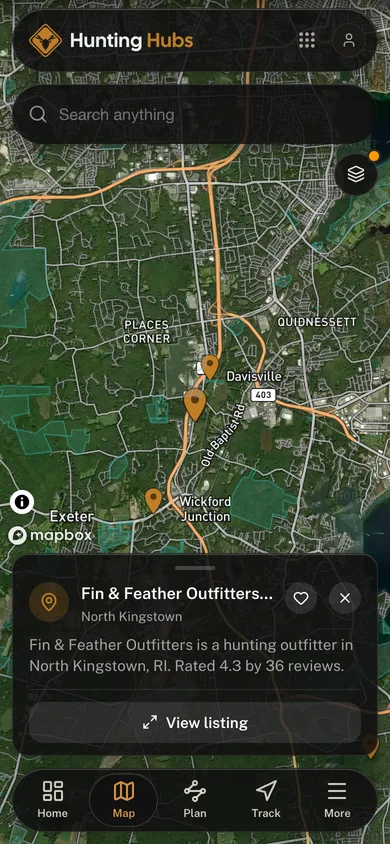
Free, no account needed. Public-land maps, field reports, and GPS tracking in your pocket.

  • Every outfitter and lodge in your pocket

  • Public-land boundaries with no subscription

  • Field reports from hunters out there now

  • GPS tracking that keeps recording deep in the backcountry

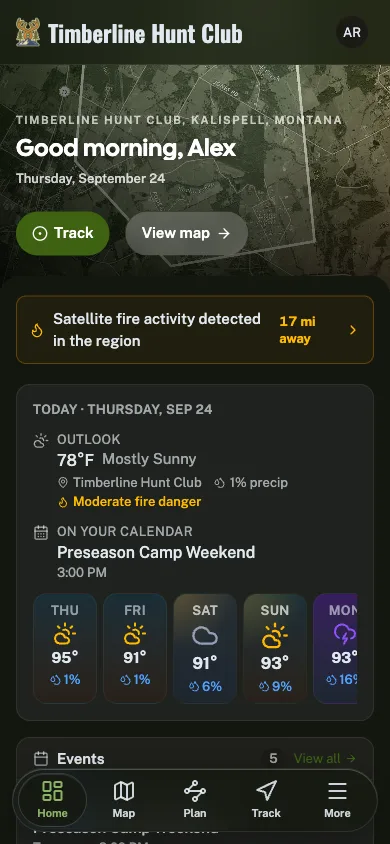
The Hunting Hubs app dashboard

For operators

Run your hunting operation?
Launch your branded surface.

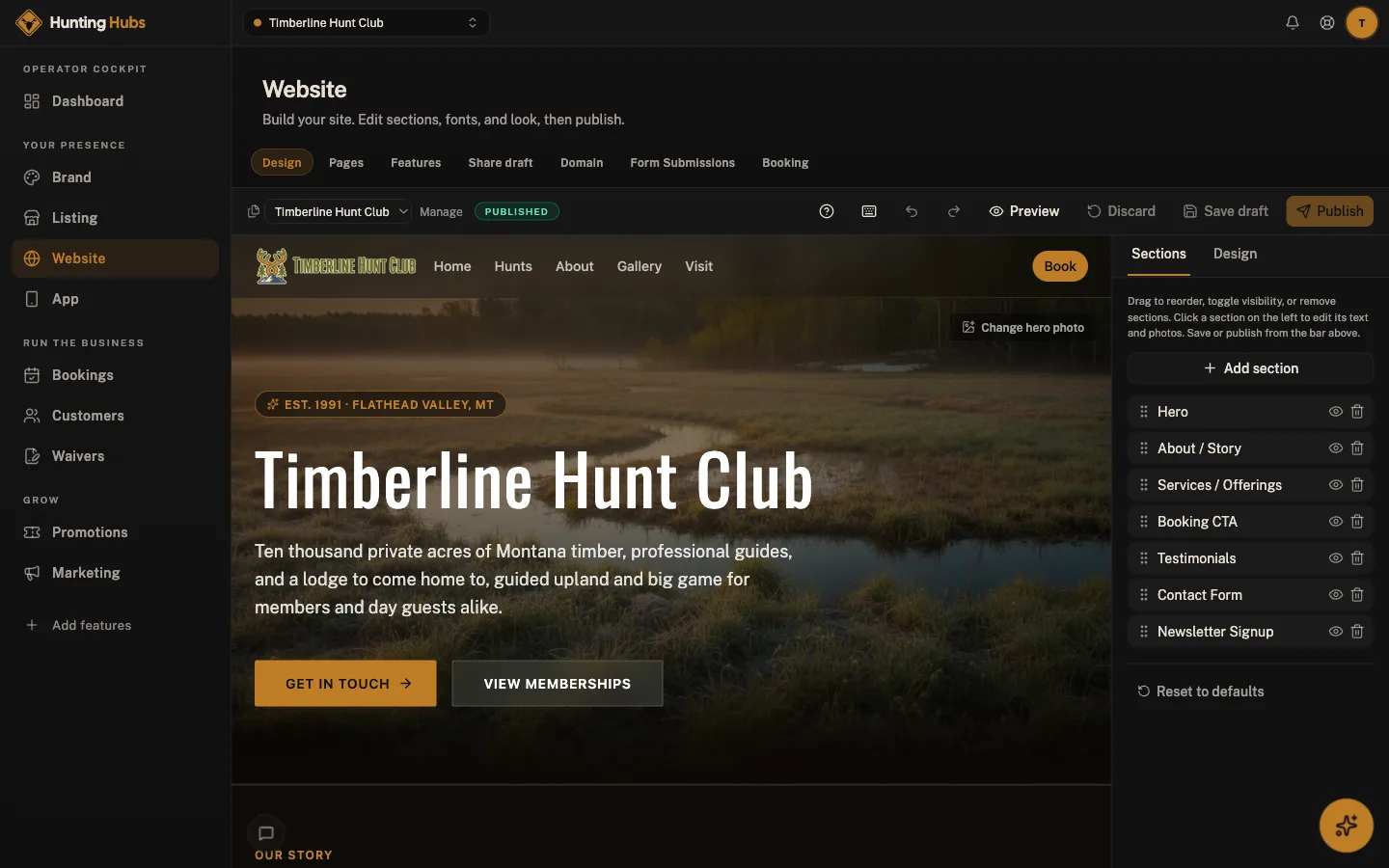
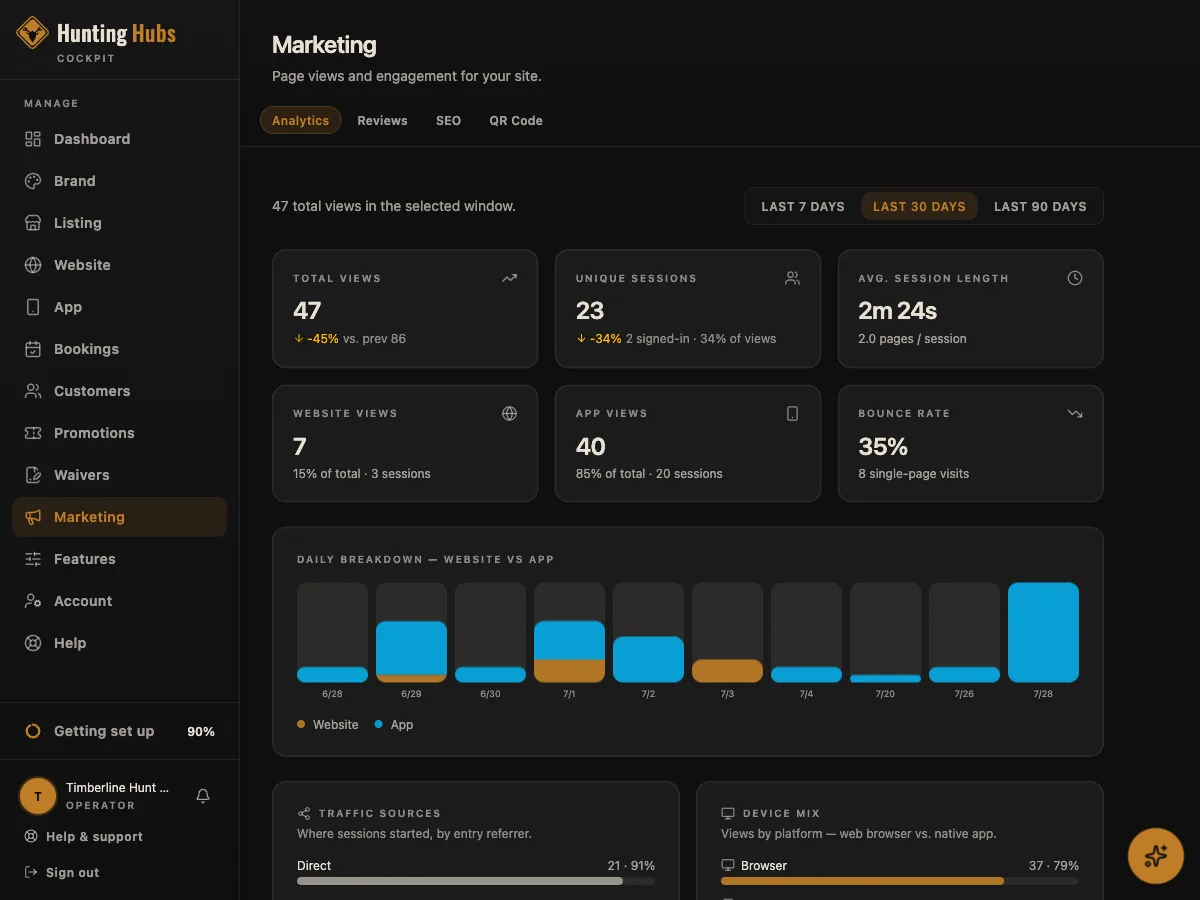
Get your own branded surface in the Hunting Hubs app and a directory listing in minutes. bookings, digital waivers, and your whole operation in one cockpit.