Skip to content
Top-rated outdoor gear, ranked

Best Of 2026

Best Hunting Rangefinders of 2026

Our top 10 picks, independently ranked. Budget to premium.

A rangefinder is the cheapest piece of gear that makes you a more ethical, more confident hunter, and the one place where the gap between a $90 unit and a $1,400 unit is genuinely confusing on a retail page that just shows you star ratings and a buy button. The truth is that nearly every modern rangefinder will tell you a deer is 240 yards away. What you're actually paying for as the price climbs is the ability to range that deer faster, in failing light, through brush, at a steep angle from a treestand, and far enough out that the number still matters.

For most hunters the sweet spot sits between $180 and $450, where you get angle-compensated (slope) readings, a crisp red display that cuts through dawn gloom, and honest performance on game out to 600–1,400 yards. Below that, capable budget units now deliver line-of-sight plus angle-compensated distance for the price of a box of premium ammo. Above it, you're buying true ballistic solutions, wind holds, extreme-range reach for Western glassing, and the optical glass that justifies a four-figure rangefinding binocular.

This guide spans that whole spectrum on purpose. We organized picks into budget, mid, and premium tiers so a waterfowler who needs a quick yardage to the decoys, an upland hunter who barely needs one at all, and a backcountry elk hunter dialing a 600-yard shot can each find the right tool, not just the most expensive one.

At a glance

#ProductPrice
1$400–$450
2$300–$400
3$180–$220
4$150–$200
5$700–$800
6$450–$500
7$250–$300
8$180–$230
9$1,200–$1,500
10$80–$130
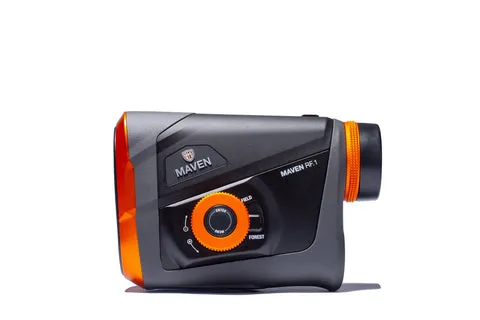
Maven RF.1
Best OverallPremium

1. Maven RF.1

Maven

$400–$450

A direct-to-consumer rangefinder that delivers genuinely premium glass, fast ranging, and a lifetime warranty for a fraction of the optics-giants' price. It ranges game absurdly far and shrugs off brutal cold.

Best for: The serious all-around hunter who wants premium performance without a premium-brand markup

Excellent 7x glass and bright, clean display · Ranges game well past most hunters' needs (deer reported near 900 yds) · Intuitive controls and unconditional lifetime warranty

One of the heavier handhelds at ~10 oz · Two-handed menu adjustments · Sold direct, so harder to handle before buying

Vortex Diamondback HD 2000
Editor's PickMid-range

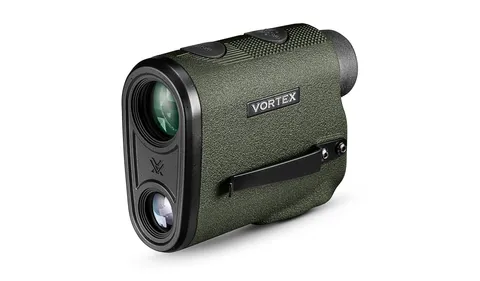
2. Vortex Diamondback HD 2000

Vortex

$300–$400

The mid-range workhorse most hunters should buy: 2,000 yards reflective, ~1,400 on game, HD glass, and Vortex's no-questions VIP warranty at a street price that undercuts its MSRP by a third.

Best for: The general big-game hunter who wants one do-everything rangefinder for life

Strong HD optics and bright readout · Honest ~1,400-yard game ranging covers any ethical shot · Rugged, waterproof, backed by unconditional lifetime VIP warranty

No onboard ballistic solutions or wind holds · HCD-only angle mode (no advanced reticle options)

SIG SAUER KILO Canyon 6x22mm
Best ValueBudget

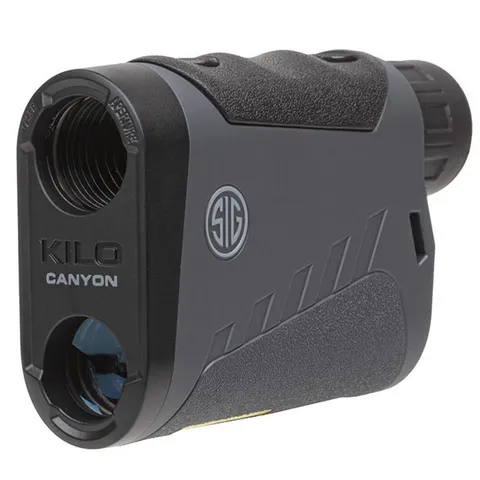
3. SIG SAUER KILO Canyon 6x22mm

SIG SAUER

$180–$220

Punches absurdly above its ~$200 price with one of the fastest ranging engines made (four ranges a second to 3,000 yards reflective), plus a bright red LED display and eight onboard ballistic groups.

Best for: The value hunter who wants near-premium speed and a red display on a budget

Blazing-fast engine, four readings per second · Bright red LED display excels in low light · Eight ballistic groups in MOA or MRAD; great value

Glass is good, not flagship-grade · Menu/ballistics setup takes some learning

Leupold RX-1400i TBR/W Gen 2 w/ Flightpath
Best BudgetBudget

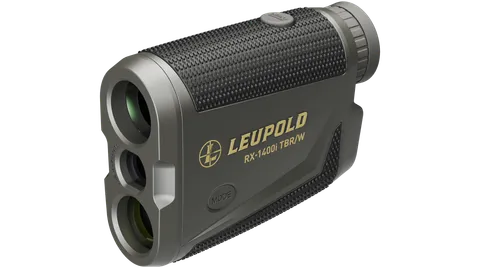
4. Leupold RX-1400i TBR/W Gen 2 w/ Flightpath

Leupold

$150–$200

The steal of the segment: true ballistic range and wind holds, a selectable red TOLED display, and a Flightpath bow mode for under $200 in a featherweight, one-hand body.

Best for: Budget-minded rifle and bow hunters who still want real angle and wind compensation

TBR/W angle + wind compensation rare at this price · Bright, adjustable red TOLED display · Light, compact, and includes a dedicated bow/Flightpath mode

Some testers note a slight blue tint to the glass · Range tops out around 1,400 yds reflective, not for extreme distance

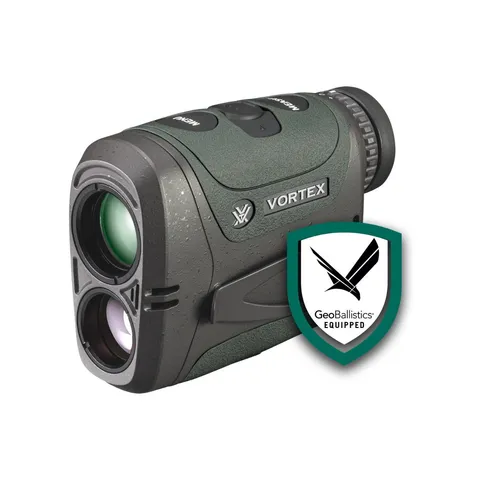
Vortex Razor HD 4000 GB
Best PremiumPremium

5. Vortex Razor HD 4000 GB

Vortex

$700–$800

The ballistics powerhouse for the long-range Western hunter: in-display GeoBallistics firing solutions, multiple rifle profiles, 4,000-yard reflective reach, and tripod adaptability under the VIP warranty.

Best for: The long-range rifle hunter who wants onboard firing solutions and maximum reach

In-display ballistic solutions with multiple rifle profiles · Extreme reach (4,000 yds reflective, ~2,200 on game) · Fast, bright, tripod-adaptable, lifetime VIP warranty

Expensive · Occasional app-connection lag · Overkill for treestand and timber hunters

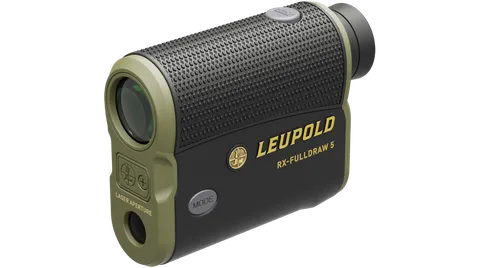
Leupold RX Fulldraw 5
Premium

6. Leupold RX Fulldraw 5

Leupold

$450–$500

Purpose-built for archers: enter your arrow weight and speed and the Archer's Advantage software computes a true flight-path-corrected aiming distance, all in a palm-sized body.

Best for: Serious bowhunters who want a flight-path-corrected aim point, not just a yardage

Archer's Advantage software models your actual arrow's flight path · Compact, lightweight, treestand-friendly · Bright red display, dialed for low-light bow hunting

Menu/setup is complex for the data it wants · Glass is good but not the class leader · Pricey for a bow-focused tool

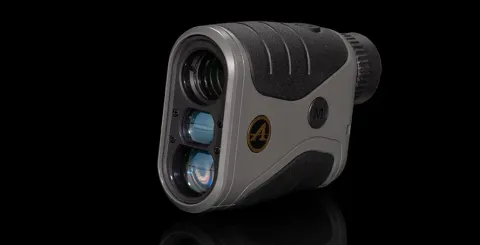
Athlon Midas 1 Mile G2
Mid-range

7. Athlon Midas 1 Mile G2

Athlon

$250–$300

One of the lightest serious rangefinders made (~4.8 oz) with a fast scan mode and Athlon's lifetime warranty, a smart pick for ounce-counting backcountry hunters.

Best for: The weight-conscious backcountry hunter who wants featherweight glass-and-go ranging

Extremely light and packable at ~4.8 oz · Quick scan mode for moving target to target · Lifetime warranty at a mid-tier price

Fewer reticle/mode options than pricier rivals · Game-ranging falls short of its '1 mile' name

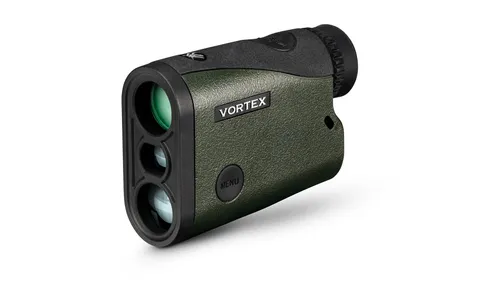
Vortex Crossfire HD 1400
Budget

8. Vortex Crossfire HD 1400

Vortex

$180–$230

Vortex's entry hunter: HD glass, HCD angle compensation, and the same lifetime VIP warranty as the flagships in a sub-5-oz body for well under $200.

Best for: First-time buyers and whitetail hunters who want a no-fuss, warrantied rangefinder cheap

Lightweight (~4.8 oz) and simple one-button operation · HCD angle-compensated readings included · Unconditional lifetime VIP warranty

LCD display can wash out in very low light · 750-yard game range suits inside-ethical-distance use only

Leupold BX-4 Range HD 10x42
Premium

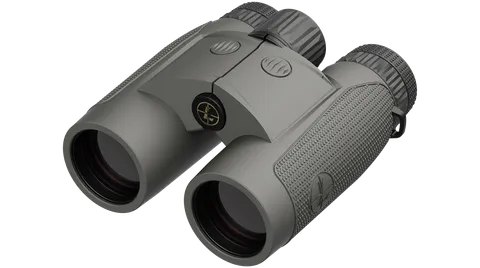
9. Leupold BX-4 Range HD 10x42

Leupold

$1,200–$1,500

Glass and rangefinder in one tool: 10x42 HD binoculars with fast onboard ranging, ideal for Western hunters who glass for hours and want to range the instant they spot game.

Best for: Western/backcountry hunters who already glass for hours and want ranging built into their binos

Combines premium 10x42 binos and rangefinder in one device · Fast ranging with excellent clarity · Saves you carrying two tools while glassing

Heavy and bulky compared to a handheld · Far more expensive than a standalone unit · Overkill if you don't glass a lot

REDTIGER Hunting Rangefinder
Budget

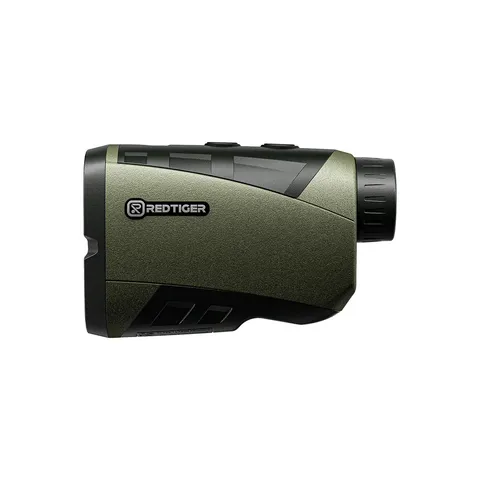
10. REDTIGER Hunting Rangefinder

REDTIGER

$80–$130

The genuine sub-$120 surprise that performs like a $200 unit: rechargeable, gives line-of-sight and angle-compensated distance at once, and gets a casual hunter ranging for the cost of a tank of gas.

Best for: Casual hunters and beginners who want angle-compensated yardage on the tightest budget

Outstanding value around $90–$120 · Rechargeable battery, no CR2 hunting · Shows both line-of-sight and angle-compensated distance

Display and interface feel clunky next to name brands · Accuracy can drift slightly at distance · Best kept to inside ~300–400 yards

How we choose

We selected and ranked these rangefinders against the three things that actually matter to a hunter in the field: how reliably and quickly the unit returns a range on a real animal (not a reflective barn) in low light, whether it gives angle-compensated 'shoot-to' distance for treestands and steep terrain, and whether its price matches the job it's bought for. We weighted real-world hunting performance, display readability at dawn and dusk, durability/waterproofing, warranty, and value far more heavily than headline max-range numbers, which are measured against reflective targets and rarely reflect game-ranging ability. Tiers reflect price and intended use: budget (roughly $80–$200) covers the essentials (distance, slope, a usable display) for bowhunters and brush-country deer; mid ($200–$450) adds better glass, faster engines, and longer honest reach for general big-game hunters; premium ($450+) is for ballistic solutions, wind holds, extreme Western distances, and rangefinding binoculars. Rankings reflect overall recommendation within the hunting use case, not price. This is an independent editorial guide: no manufacturer paid for placement or a ranking. We may earn a commission if you buy through our links, which never affects what we recommend.

Common questions

A rangefinder's advertised max range (e.g. '2,000 yards') is measured against large, flat, reflective targets under ideal conditions. A live animal is small, soft, and non-reflective, so real game-ranging distance is typically 40–60% of that headline number. A unit rated to 1,400 yards reflective will usually range a deer reliably out to roughly 600–800 yards. For most hunting, anything that ranges game to 600+ yards is more than enough.

Yes, it's arguably the single most important hunting feature. When you shoot at a steep up or down angle (from a treestand, off a ridge, or down into a canyon), gravity only acts on the horizontal portion of the distance, so the true line-of-sight number will make you shoot high. Angle-compensated modes (Leupold calls it TBR, Vortex HCD, etc.) give you the corrected 'shoot-to' distance. Bowhunters and mountain hunters should consider it non-negotiable.

For most deer and turkey hunters, a $180–$300 unit hits the sweet spot: angle compensation, a bright red display, and honest ranging well past ethical shot distance. Bowhunters can be happy under $200. You only need to climb toward $450 and up if you want onboard ballistic firing solutions, wind holds, extreme Western reach, or the premium glass of a rangefinding binocular. A $90–$120 budget unit is a legitimate option if you mostly hunt inside 300 yards.

It matters a lot at the times you hunt most. Black LCD displays are cheaper and perfectly readable in daylight, but they can wash out against dark timber or shadowed animals at dawn and dusk. Illuminated red/OLED displays stay crisp in low light and against dark backgrounds, which is exactly when game moves. If you hunt first and last light, which is most of us, prioritize a quality red display with adjustable brightness.

A standalone unit is lighter, far cheaper, and fine for treestand, blind, and most whitetail hunting. Rangefinding binoculars combine your glass and rangefinder into one tool, a real advantage for Western hunters who spend hours glassing and want to range the instant they spot an animal without setting down their binos. The trade-off is weight and a much higher price (often $1,000–$4,000). Buy the bino only if you already glass a lot.

Only if you're a long-range rifle hunter who wants the rangefinder to feed your exact load data into a firing solution. For the majority of hunters taking shots inside 400 yards, onboard angle compensation is all the 'ballistics' you need, and app pairing is a nice-to-have that adds cost and a battery drain. Don't pay extra for connectivity you won't use in the field.

Some links are affiliate links, and we may earn a commission at no extra cost to you. It never affects our rankings.

In your pocket

Take the whole unit with you.

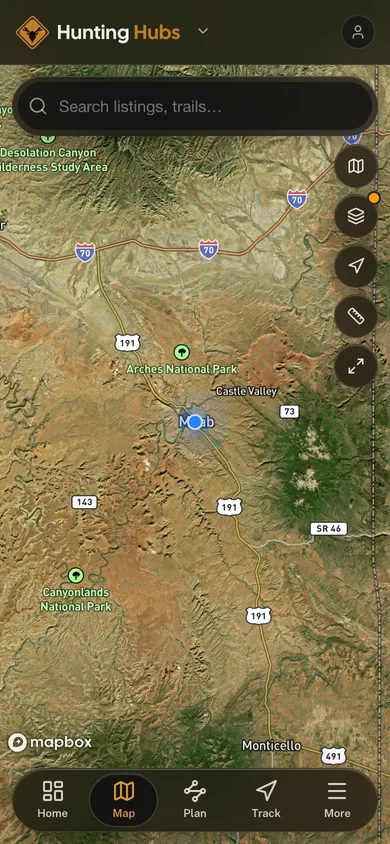
Free, no account needed. Public-land maps, personal waypoints, and GPS tracking in your pocket.

  • Every outfitter and lodge in your pocket

  • Public-land boundaries with no subscription

  • Mark stands and sign with personal waypoints

  • GPS tracking that keeps recording deep in the backcountry

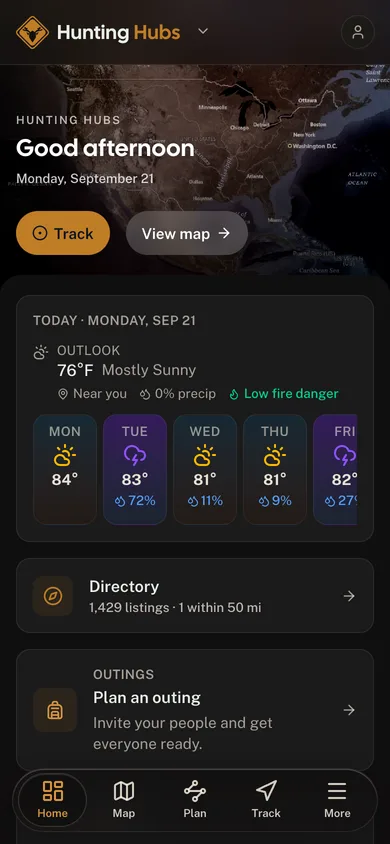
The Hunting Hubs app dashboard

For operators

Run your hunting operation?
Launch your branded surface.

Get your own branded surface in the Hunting Hubs app and a directory listing in minutes. Bookings, digital waivers, and your whole operation live in one cockpit.